Automates roof assessment from property imagery, generates structured scopes and connects homeowners with multiple contractors through a blind tender process, replacing site visits and fragmented quoting with a single digital workflow.


.svg)
Roof replacement quoting is slow and fragmented. Homeowners must contact multiple contractors and arrange site visits, while contractors repeatedly spend time measuring properties and preparing quotes without knowing whether they will win the job.
.svg)
Roof data had to be derived from external imagery and geospatial sources, converted into reliable measurements, and reviewed when necessary. The platform also had to standardise scopes while supporting different property types, roofing materials and regional requirements.
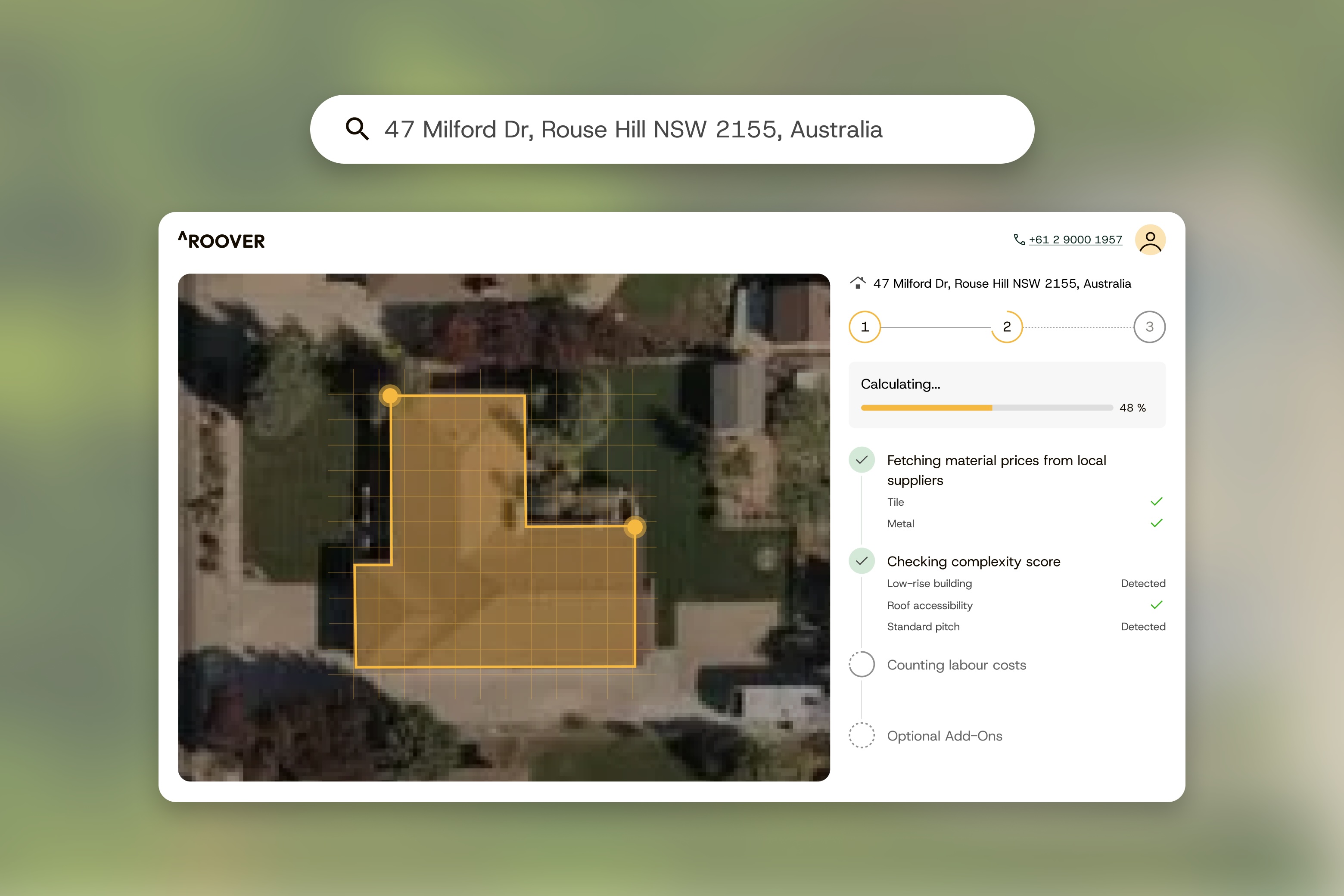
We developed a property assessment and contractor marketplace platform designed to digitise the complete journey from a homeowner's initial roofing enquiry to selecting a contractor.
The traditional process requires homeowners to contact several roofing companies individually, arrange multiple property visits, explain the same requirements repeatedly and then compare quotes that may use completely different assumptions and scopes. Contractors face the opposite side of the same problem: significant time is spent travelling to properties, taking measurements and preparing estimates for opportunities they may never win.
The platform replaces much of this manual process with a structured digital workflow. A homeowner begins by entering a property address. The system identifies the property and combines geospatial information with high-resolution property imagery to create an initial roof assessment. Roof geometry is analysed to determine characteristics such as surface area, roof type, pitch, number of storeys, height and other relevant structural features.
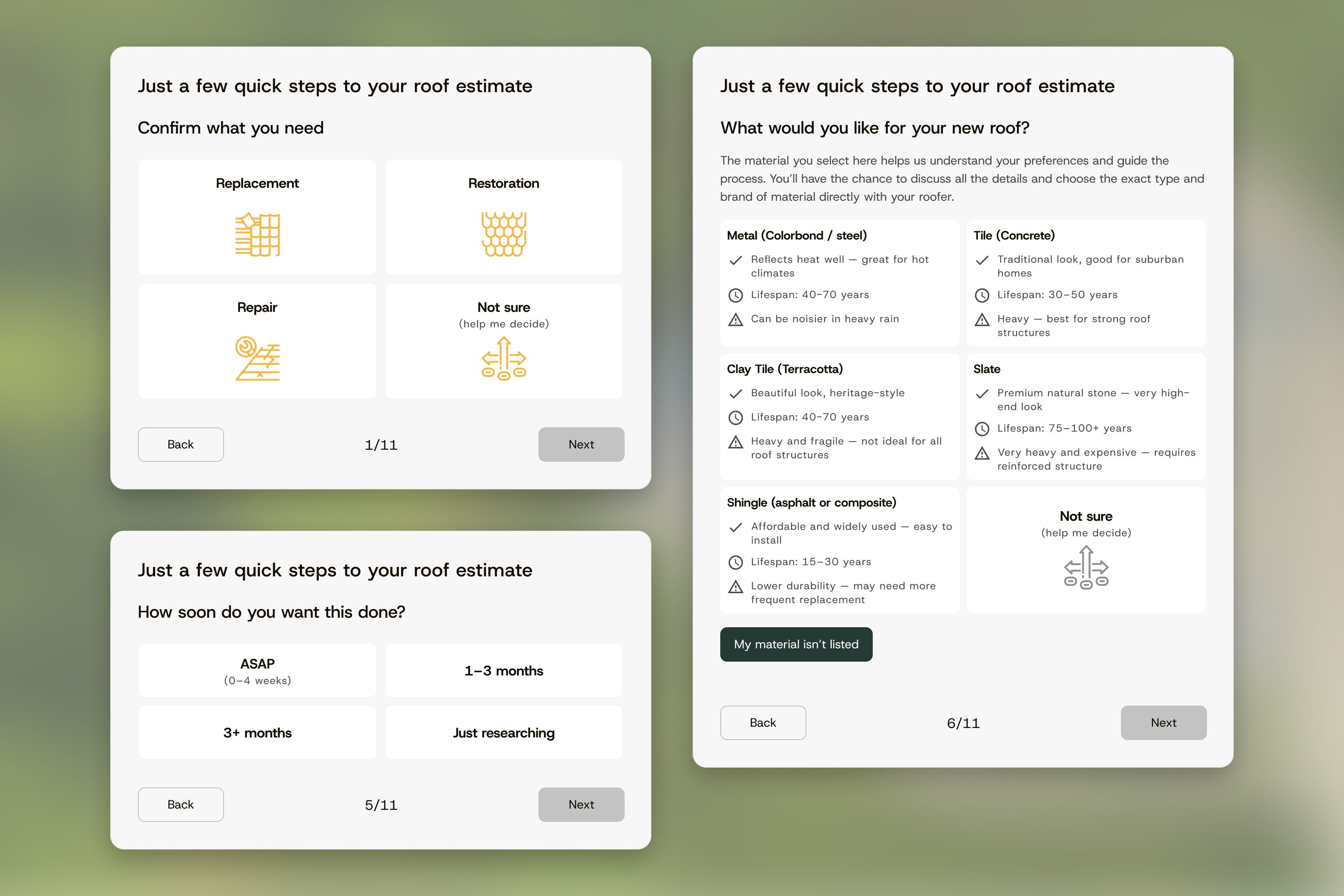
The automated assessment is complemented by a guided homeowner questionnaire that captures information that cannot reliably be determined from imagery alone. This includes roofing material, solar panels, skylights, obstructions and other property-specific details. The resulting information is consolidated into a structured property profile and scope of works.
For properties where automated information is incomplete or requires additional validation, the platform supports a dedicated measurement workflow. Internal specialists can review available imagery and property data, refine measurements and prepare the property for tender. This human-in-the-loop approach allows automation to handle straightforward properties while maintaining an operational path for complex cases.
Once the scope is ready, the project moves into a competitive tender process. Suitable contractors can review standardised project information, decide whether to participate and submit their pricing. The tender is designed around blind bidding, preventing contractors from seeing competitors' prices and creating a more independent quotation process. The homeowner can then compare approved quotes using the same underlying scope instead of trying to reconcile several fundamentally different estimates. This standardized-scope and blind-bidding model is also central to the product's public positioning.
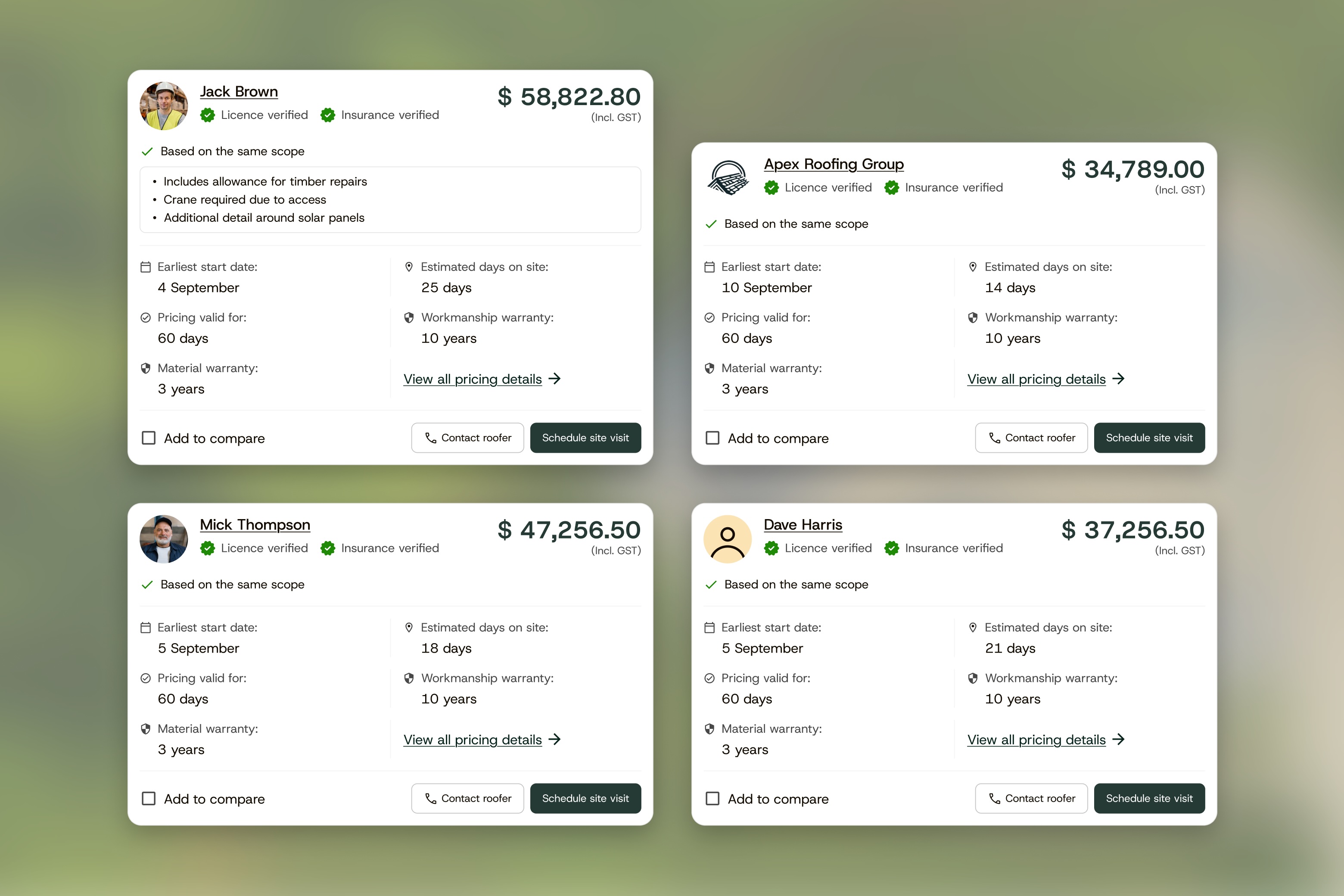
We implemented separate experiences for homeowners, contractors and the operational team. Homeowners can follow the project from property assessment through scope preparation, tendering, quote comparison and contractor selection. Contractors receive relevant opportunities and manage their participation and quotations, while internal teams use administrative and middle-office tools to manage assignments, measurements, tender progress and exceptions.
The platform integrates multiple external property and mapping data sources while maintaining its own normalized representation of roof geometry and project information. Automated background processing handles long-running property analysis and measurement tasks without blocking the customer journey.
The result is an end-to-end digital marketplace that transforms roofing quotation from a sequence of disconnected calls, site visits and manually prepared estimates into a structured and transparent workflow. Homeowners receive comparable offers based on a common project scope, while contractors can evaluate opportunities before committing significant time to on-site quoting.


