IoT-enabled cooking devices deployed across 3 African markets, integrated with multiple mobile money providers, a custom device communication protocol, internal CRM, automated data processing and real-time operational dashboards.


.svg)
A rapidly growing clean-energy business needed a unified system to manage customers, connected devices, payments and field operations while continuously collecting reliable usage data from hardware deployed across multiple African markets.
.svg)
Operations had to work across countries with different mobile payment providers and network conditions. Thousands of remote IoT devices needed reliable data exchange, while CRM, payments and telemetry had to remain synchronized for operational and impact reporting.
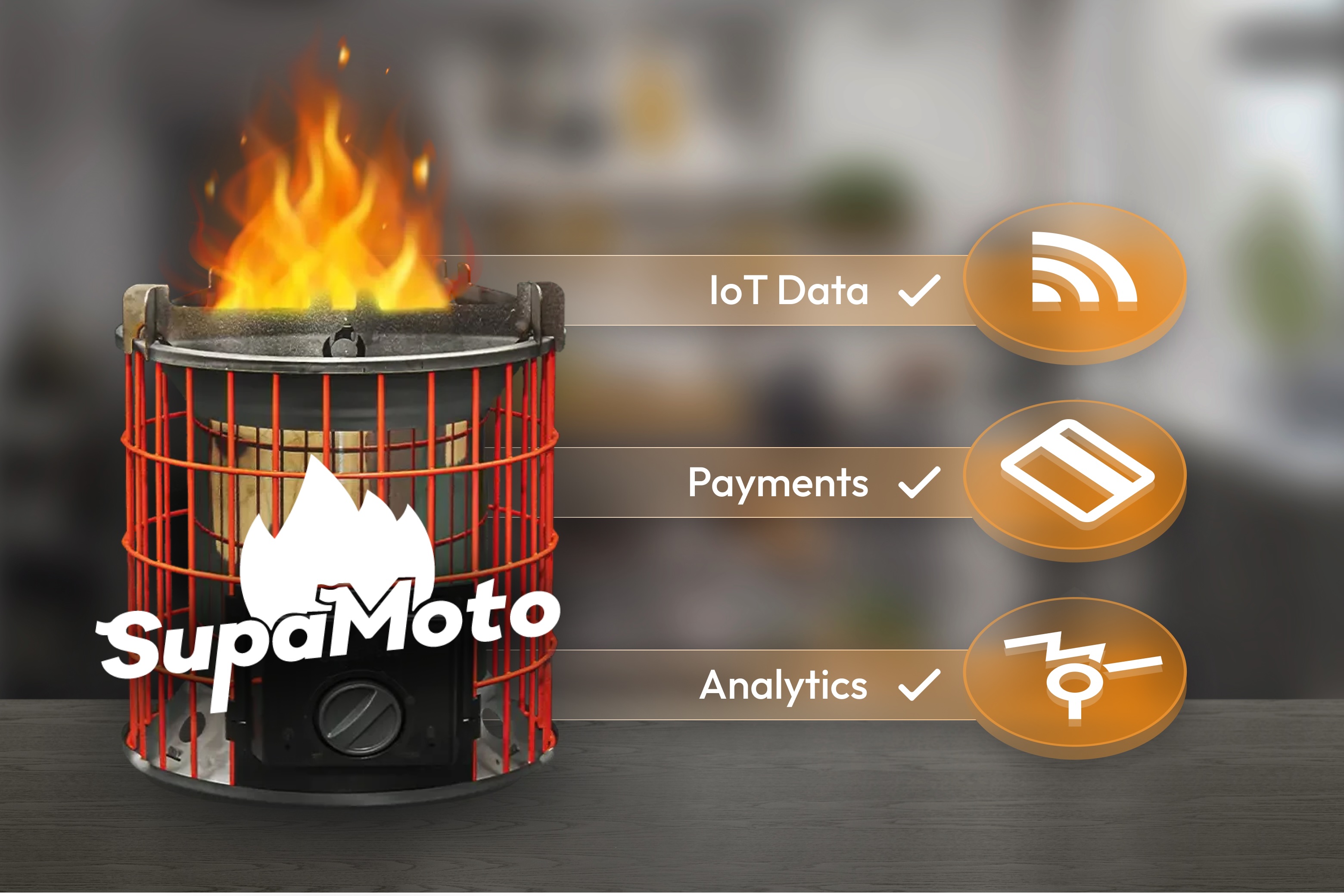
We developed a comprehensive digital platform for a clean-energy company providing connected cooking solutions to households across multiple African markets. The business combines physical IoT-enabled cooking devices, recurring fuel purchases, mobile payments, field operations and environmental impact measurement, creating a complex ecosystem where hardware, financial and customer data must work together.
A major part of the project was payment infrastructure. The business operates in markets where mobile money is a primary payment method, requiring integrations with multiple local providers rather than a single traditional payment gateway. We implemented and maintained integrations across Zambia, Malawi and Mozambique, normalising different provider APIs and transaction flows behind a common application layer. Incoming payment events were automatically processed and connected with the relevant customer records, allowing operational and financial information to remain synchronized.
The connected-device ecosystem represented another significant engineering challenge. Cooking devices deployed in customers' homes continuously generated telemetry that needed to reach the backend despite varying network quality and infrastructure limitations. We designed and implemented a custom communication protocol for the IoT devices, enabling efficient and reliable exchange of data between remote hardware and the cloud platform.
The backend infrastructure processes incoming device messages, associates telemetry with individual devices and customers, and transforms raw IoT events into structured operational information. This created a continuous data pipeline between physical devices in the field and the company's central software platform.
Real-time synchronization was particularly important because device information was valuable beyond technical monitoring. Usage data could be combined with CRM and operational information to understand device activity, customer behaviour and adoption of clean-cooking technology. Public information about the business also describes actual stove-usage monitoring as an input into verified environmental-impact and carbon programs.
We therefore built dashboards that transformed continuous streams of IoT, customer and transaction data into accessible operational metrics. Teams could monitor activity and business performance without manually collecting information from devices, payment systems or separate databases.
The resulting platform connected four traditionally separate domains — IoT hardware, customer management, regional payment infrastructure and real-time analytics — into a single operational ecosystem. It allowed the business to scale its connected clean-energy model across several markets while maintaining centralized visibility into customers, payments and devices deployed in the field.


