WhatsApp chatbot combining conversational AI, guided KYC, automated customer support and backend integrations to provide a familiar self-service channel for customers in African markets.


.svg)
A growing clean-energy business needed to onboard and support customers efficiently without requiring every KYC step, common question and customer request to be processed manually by its customer service and field teams.
.svg)
The solution had to work through WhatsApp, support structured KYC conversations, understand natural-language requests and securely exchange customer information with an existing CRM and operational ecosystem deployed across multiple markets.
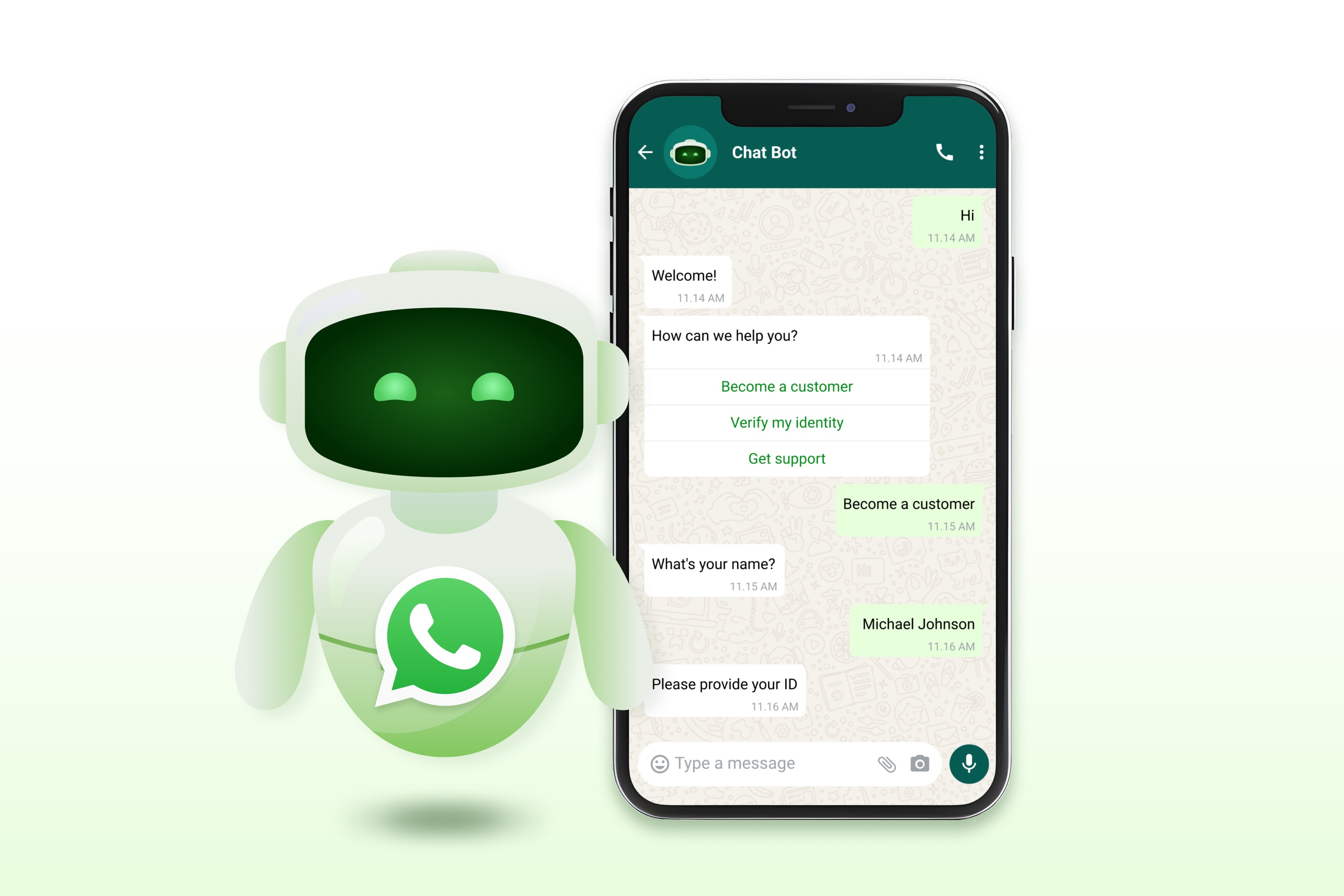
We developed a WhatsApp-based conversational assistant for a clean-energy company serving customers across African markets. The goal was to provide customers with an accessible digital channel for onboarding, identity verification and everyday support while reducing the amount of repetitive work handled manually by customer service and field teams.
WhatsApp was selected as the primary customer interface because it allowed users to interact with the business through an application already familiar to them, without installing or learning a dedicated mobile application. Customers could start a conversation with the business and be guided through predefined processes using a combination of natural-language interaction and structured conversational flows.
One of the chatbot's key responsibilities was customer onboarding and KYC. The assistant guided customers through the required steps, requested relevant information and progressively collected the data needed to complete their profile. Rather than treating the chatbot as an isolated communication channel, we integrated it with the company's existing backend and customer-management infrastructure so that information collected through WhatsApp could be validated, processed and associated with the corresponding customer records.
We implemented the conversational layer using Google's Dialogflow platform. Dialogflow handled intent recognition and conversation routing, allowing the assistant to understand common customer requests and determine the appropriate workflow or response. The surrounding backend services were deployed on Google Cloud Platform and provided the integration layer between the conversational interface and the company's existing systems.
The chatbot also automated answers to frequently asked questions. Customers could receive immediate responses to common product, service and onboarding questions without waiting for a support representative. Structured conversational flows ensured that common scenarios were handled consistently while allowing more complex or unsupported requests to remain part of the broader customer-support process.
A significant part of the engineering work involved integrating the chatbot with an already established technology ecosystem. The existing platform contained customer records, operational information and other business services used by internal teams. We designed the chatbot backend to interact with these systems rather than creating a separate customer database, keeping WhatsApp conversations synchronized with the same information used by the rest of the organization.
The architecture separated the communication channel, conversational intelligence and business logic. WhatsApp acted as the customer-facing interface, Dialogflow handled natural-language understanding and conversation management, while cloud-hosted integration services communicated with internal APIs and operational systems. This separation allowed conversational flows to evolve without tightly coupling them to the underlying business infrastructure.
The resulting solution transformed WhatsApp from a basic messaging channel into an automated customer-service interface. Customers gained a convenient way to complete onboarding steps, provide KYC information and receive immediate answers to common questions, while the business reduced repetitive manual interactions and connected conversational customer journeys directly with its existing CRM and operational processes.


